Tube Junkie

555ea9691e96adfc5fe6a7d64cb3a289.jpg


For as long as I can remember I have been a sucker for electronic gadgets. I was about nine when the transistor was invented. Before then, everything used tubes. The local dime store had a tube testing machine, and I found that I could collect old radio and televisions from the neighbors that no longer worked and find out which tubes were burnt out. Even though I couldn’t buy the replacement tubes, I could tell someone else how to fix the set.

We also had an X ray machine at the local shoe store that allowed you to see the bones in your feet. The salesmen would chase me away when they found me playing with it.

In the sixties, everything electronic began to change rapidly. Printed circuit boards containing semi-conductors don’t have the same panache that wires and tubes had. I began to lose interest. The more I learned about electronics, the more it seemed like math, which I had concluded wasn’t up my alley. I was in love with glowing orbs of glass, the smell of hot wax off a transformer, bakelite knobs and cases. I was an artist, not an engineer.

Tubes are making a comeback with the hi-fi crowd. There’s a factory in the Ukraine that still makes them. On my Facebook feed I see ads for them, and for audio amplifier kits that use them. Although I have no desire to try again to assemble an electronics project kit, (my Heathkit Shortwave Radio was a total bomb) I am amused and delighted to see my old friends that 12AX7 and the 6AU6.

And that nonsense idea “cut your cable bills and turn your house wiring into a giant antenna!” still lives! People are falling for it fifty years later. Maybe the price is so low people don’t bother to demand their money back.

Cleverness is Overrated

1_wnMpH57zSCuzBL__1YF1cA


Some days it pays to be clever, other days it’s best to put a sock on it. Limit invention. Just dig what’s up.

For those who have been rewarded for their cleverness, this is hard work. Sometimes you can only change your behavior a tad, a wee bit, and only for a short amount of time. You can pretend to be less clever than you actually are for half an hour. Then, “ding!” it’s time to don that thinking cap.

I have met people who are just as “intelligent” as college professors, but to whom it would never occur to try to tell other people what or how to think. They simply are too humble to want to go there. It would be obnoxious, impolite, intrusive, arrogant, and distance thesmselves from others, which in the West is considered virtue and in the East, a vice.

Interestingly, and maybe paradoxically, strong leaders of nations often downplay any cleverness they posses. Instead, they would rather be considered “strong.” As rigid as they are ruthless. Unafraid of popular opinion.

John Wayne was never admired for being clever. He didn’t need to resort to discourse or persuasion. He’d just punch you in the mouth if it seemed that’s what you needed. People wished our President was more like John Wayne than some damn pointy-headed college professor. The citizenry applauds simple solutions to complex problems.

If cleverness isn’t working any more, try pretending to be dull yet determined. Such people are often admired and respected far more than those seeking approval or agreement.

Loved It But Left It

32235474_10156363428309104_7791005215347441664_n


There’s a term “race to the bottom” which describes a lose-lose scenario. When everyone selfishly tries to undercut the competition, nobody wins. That’s where we are now in more ways than one.

If the country were a person, it could examine its conscience and trace its thinking and actions back to where shortsighted decisions got us where we are today. We could confess our sins and see a therapist. We could come up with an action plan to regain our equanimity. We could admit our wrongs, repair damages wherever possible, and move on.

But we’re not a person. We’re 330 million people, all of whom find it more convenient to blame someone else for the fix we’re in.

Maybe it’s my own form of historical narcissism, but it seems to this baby-boomer that we started digging a really deep hole for ourselves to fall in about the time I was born. The Korean War was a shameful exercise in bombing others into submission. We repeated the experiment about fifteen years later in Vietnam. Then, about twenty five years later, we created a false flag event to justify invading and destabilizing the Middle East.

None of this was my doing, but I was around for all of it.

I would like to see justice served. I would like to see aging, crippled Henry Kissinger executed on television. I would like to see Cheney, Bush, Rumsfeld, Rice and whoever else was behind the Weapons of Mass Destruction scam sentenced to life in prison.

I would like to see our current president confined to a mental hospital. But what I would like to see happen and what will probably happen almost certainly have nothing in common. This has always been the way it worked for me. I have never voted for a winning candidate in a political race. When I voiced my opinions about the Vietnam War I was invited to “Love It or Leave It.” So now, after living in America for over sixty years, I chose to leave and I’m happy I did so.

NORMAL FOLK

32464501_2062464337303169_3388004399337963520_n


Dear Gentlemen:

I can’t address this letter any more specifically, because I don’t know your names yet. I have been told that you are a group of older gentlemen who live in the same rooming house, Esquire Point, on D Street, behind McDonald’s.

My name is Madison Kimberly, and I am a graduate student in social work at our local University. You men have been identified as being “at risk” for depression, alcoholism and other conditions related to men living along in senescence. Senescence is just a fancy word for growing old.

On behalf of the Mahaska County Community College Outreach Division of Continuing Education, I would like to invite any and all of you to attend a free lecture at our local public library (meeting Room A, 8 pm. This Tuesday) where we will explain our new certification programs in Life Coaching and Grief Management. We think these might be of special interest to your group, as many of you have a lot of life experience you could share with others, including crucial skills in overcoming disappointment, etc.

The certification program contains forty hours of classroom instruction and eighty hours of supervised field work. Those who complete the program will receive a certificate that will enable to them to practice in this field, should positions ever become available. Even though no such positions exist at present, we are optimistic that as soon as this latest budget crisis passes, the Governor and our Board of Regents will get busy instituting outreach programs that will employ at least some of our graduates.

We hope you will come to the meeting next Tuesday and see for yourselves what this program might have to offer you. We hope you are in no way insulted that we have identified you as a group who might want to take advantage of this opportunity.

Yours,

Madison Kimberly

B.S. Social Work

Dear Miss Kimberly:

I read your letter some of the men on my floor here at Esquire Point, and then posted it on the bulletin board in the lobby. I must say, yours is the first contact we’ve had with the world outside of our rooming house in quite a while. Many of the men found your letter amusing. I found it touching. Thank you for caring about us.

There are many people, especially young women, who would cross the street to avoid passing close to one of us. But to you and them I say, “Don’t be shy. Don’t be afraid to get to know us. We’re really quite harmless.”

Although many of our members have spent time in prison, now that we are no longer incarcerated we can mingle freely with those who have never done hard time. You’ll find we are normal folk deep down. On the surface we may be grizzled and scarred, but for most of us that simply is evidence of character. If you look deeply into our eyes, you will see kindness there. Kindness wrought from suffering.

We have no axes to grind, no scores to settle. Our feelings towards you are avuncular. We want nothing more than to delight in your success, to commiserate with your trials. Although we lack the resources to solve your problems, to give you a leg-up, we are there for you, emotionally.

The fact that we live in cramped furnished rooms rather than spacious apartments, eat beans warmed on a hot plate and watch watch daytime TV on a tiny, thirty-year old black-and-white set we found for free in a pile of refuse, doesn’t mean we don’t share a common experience with you. No, we are not adept at social media, we own no smartphones, but we aren’t stupid. We know what’s coming down. We are fully aware of the peril that exists in these more perilous of times.

It doesn’t matter if we were veterans of our nation’s wars with Korea, Vietnam, Iraq or Afghanistan, we are no more conservative politically than most. Like you, we thought the Lawrence Welk show was embarrassing. Just as you do, we think Jim Bakker is a huckster and con-man who targets frightened widows with empty assurances. We are not fooled by the saber-rattling of those who stand to profit from further wars. We weren’t born yesterday. We have been around the block a time or two.

We do, however, harbor strong feelings about certain issues. We don’t believe the Warren Commission’s or the 9/11 reports. We know that our Presidents routinely lie to us. We think there’s a very good chance that Eisenhower met with the aliens at Roswell and oversaw the transfer of technology that allows for anti-gravity flight and virtually free energy generation.

We know that these developments have been kept secret in order to sustain the status-quo. Those who stand to benefit from business as usual have deprived us of many blessings, and are doing their best to keep doing so.

Who are we to change this? We are old men who mutter to themselves at night before drifting off the sleep, lit cigarette in hand. We matter to no one, least of all ourselves. You can’t discourage us further, because we have already reached the bottom of that particular well.

Burl Gustaphson, on behalf of the residents of Esquire Point

Dear Mister Gustaphson:

Thank you for your prompt reply! I must say that your letter went a long way to confirming my assumptions about your group. I’m sure you all have a lot to offer and I’m determined to do what I can to help make that possible.

You may remember that a few years back, they were diagnosing almost everyone with depression and then prescribing antidepressant drugs. Well now, things have changed in that department, and the general feeling is that was just a marketing push by Eli Lilly, maker of Prozac. A few years later the popular diagnosis became bi-polar disorder, but that was just a push by the manufacturers of lithium and Seroquel. Current belief is that instead of serotonin of dopamine imbalance, many people, especially older people, are suffering from chronic loneliness. There is no pill that will cure that.

We hope that our program will address that condition in our locally targeted populations. It is our dream that you will all soon become trained and certified in the healing arts that will enrich the lives of all in our community!

Oh, and before I forget, my supervisor told me that scholarships will be available to pay most of the tuition costs for this pilot program. So be sure to spread the good news to your friends.

Sincerely,

Madison Kimberly

B.S. Social Work

Dear Miss Kimberly:

I don’t think you’re going to get far with this crowd. Even if your program were absolutely free, we don’t see any value in it. We’re not looking for education or certification. Most of us are looking to crack a couple of cold ones and watch TV. Some of us spend a lot of time concerned about and anticipating our next bowel movement.

But you sound like a nice girl, so here’s all of us wishing you good luck on finding takers for your pilot program, which I must admit none of us here understands.

Yours,

Burl Gustaphson

Esquire Point

Lock-Down


32743369_2062344127420625_8960278845861134336_n


You’ll have to stay put until something can be established. As long as no one is certain what’s going on, or can reasonably describe what happened, we’re going into lock-down mode. All exits will be sealed until further notice.

People don’t just turn into liquid and flow down the street. Babies don’t spontaneously combust. Sure, unusual things can happen, but then the burden of proof is greater. No one is going to believe you were taken up to Heaven, met Jesus, and then came back down to Earth to tell us all about it. At least they won’t believe it unless you can start showing some miraculous proof.

Miraculous proof is all that we require. Oh, and promotion. Nothing matters without proper promotion. In a better world the important and true would rise to the top, but not here. On this miserable rock bathed in a veil of tears, if it hasn’t gone viral, it simply hasn’t gone anywhere.

What you witnessed may or may not have happened. You might be deluded. Many deluded people aren’t aware of their condition. Look at our President. Just because you fervently believe in something doesn’t mean it exists. Artistic types make stuff up all the time. Some are quite convincing, but everything they invent is conjured up out of thin air.

These are not necessarily bad people who invent things that don’t actually exist. They might be benevolent, caring, imaginative, and supportive of creativity in others. They might also be pathological liars. We who are inclined of give the benefit of doubt are potential victims of this latter group.

And so for the time being we must seal or borders. We must suspect that everyone has a malevolent purpose. Their intentions are to do us harm. “What would Jesus do?” you ask. He would do what we are doing. He would hunker down.

“But” you protest “the Jesus I met in Heaven after I had been swept up to kneel at his feet would embrace even the most snarky of us.” Maybe. But we are not Jesus.

We are simply your neighbors who are trying to make the best of a bad situation. We did not cause this calamity, but we are trying to minimize the negative outcomes. Maybe there won’t be any. Indeed, we could be making a mountain out of a molehill. But someone did testify that he saw another person liquefy and that other person has not been seen since. There is a noticeable smell in the air, like burnt toast, except it smells a bit like burnt rubber and burnt toast. There is also a dog that won’t stop barking, but no one has been able to find the dog. So we are confused and anxious. We will batten down the hatches until the storm has passed.

An Ill-Conceived Amusement Park

octopus2


He decided to call it Squidland. It was to be an aquatic park featuring octopuses, but they could think of no name with the multi-syllabic octopus that tripped off the tongue. The logical choice would be to copy the title of the Beatles song, but the possessive of Octopus was the problem.

Fish are not sexy. Aquariums cannot compete with zoos. Squidland was especially poorly situated, on an outer ring road of Auburn Park, a small city that had failed to meet earlier growth projections. The city fathers had pressured the local banks to fund a business park which had never attracted any businesses. A Dollar Store was the only tenant.

Squidland was behind the business park, a long, thin ten-acre parcel that ran along a creek. The only people who worked there full-time were a groundskeeper and a couple of interns from the Auburn Park community college.

The owner had developed a fascination with octopuses when he was a graduate student in biology. He claimed to have had a one-month conversation with an octopus and insisted they are smarter than us. He also believed that they came from another planet, where they had evolved over a period of millions of years. Freeze dried octopus eggs had floated our way, part of the millions of tons of cosmic dust that rains down on our planet annually.

At present Squidland has no octopuses, just squids. Fifty or so, floating in an almost clean Plexiglas tank. Some of them were dyed different colors in an attempt to make the exhibit more colorful.

Squidland’s founder, J.J. Palmer, suffers from dementia. Most of the time he seems lucid, but when you listen closely to what he’s saying, you realize that he’s faking it. He doesn’t have a clue what he’s trying to say. The words come out all right, but they don’t add up to anything. Fortunately, he still remembers how to simulate the rhythms of normal conversation, so he doesn’t talk too long. He ends his statements by downwardly inflecting his voice, implying that he’s gotten his idea across. Except there was no idea to begin with.

He visits the site every day, often sitting in the main foyer and chuckling softly to himself. The only other sound is the bubbling of the aerator in the squid tank. One of the younger interns tried playing music on a Bluetooth speaker, but J.J. asked her to turn it off. It interrupted his train of thought. She squirmed and finally quit. The noise in her own head was driving her crazy.

Eventually, the time came when Mr. Palmer was no longer able to care for himself. They put him in a home with a lot of other demented old people, and he forgot about Squidland. Once the bills stopped being paid, the employees and interns stopped showing up. The power was eventually turned off, which meant the air bubbler stopped working. And that’s when something strange occurred.

The squid climbed out of the tank and wriggled and flopped their way across the floor. They slid under the front door and out onto the parking lot and into the grass. Fortunately, it was raining.

They stopped when they made it to the base of a tree, and there they combined with worms, snakes, frogs, various fungi, and assorted insects, to produce a large hybrid creature, which quickly evolved in size and intelligence.

Since Squidland was no longer being maintained, it became a refuge for the homeless. A dozen men retired there every evening, and some of them became embraced by the new life form and altered. While generally retaining their former outward appearance, they became subjects of the larger life form, and were released to apply for positions in city government. Several joined the city council, and after a year or so, one became mayor.

It was the mayor himself who purchased an octopus and brought it to live in the tank at Squidland, now renamed the “Auburn Park Aquatic Center.” Soon, neighboring communities purchased their own octopuses, and within a few years, there were dozens of these creatures who appeared to be simply inhabitants of museums and aquatic centers, but who were actually running the whole show.

Once the octopuses gained political power, things went more smoothly than they had in years. Within a decade, the state was running a sizable budget surplus, there were aquatic parks in every community, as well as fifty-meter swimming pools, and almost every child was on a swim team. J.J. Palmer never learned of his success, but that didn’t matter, because he died a happy, if demented, man.

Portraits in a Selfie Age

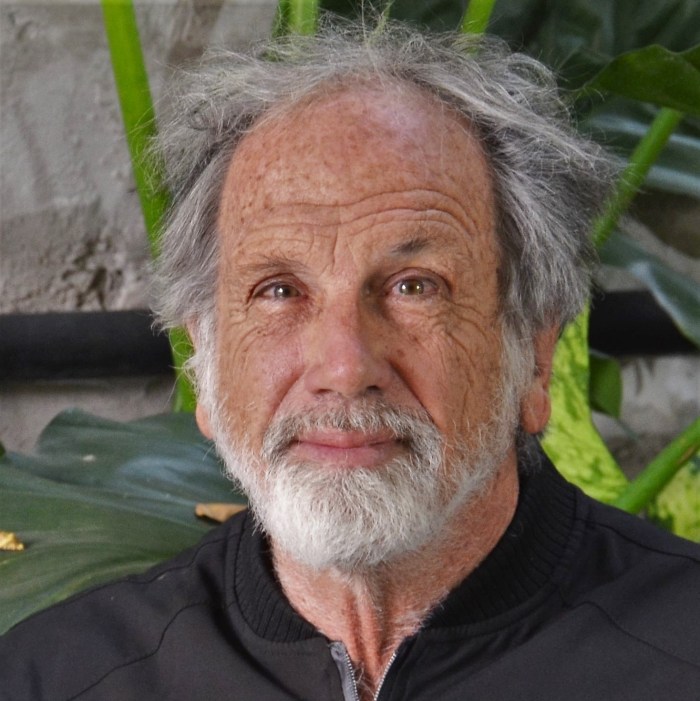
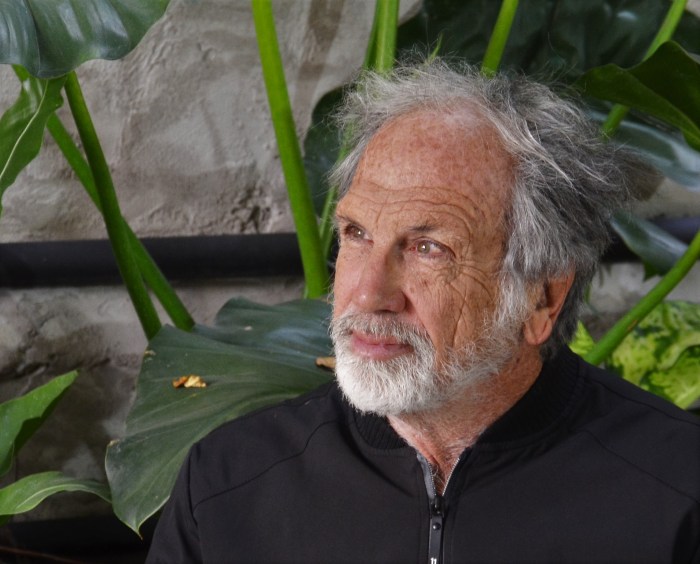
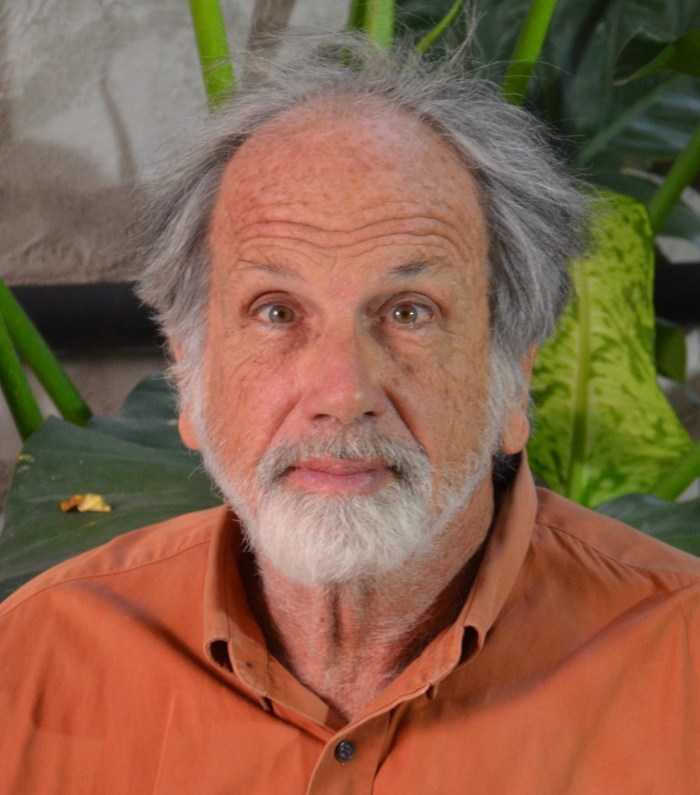
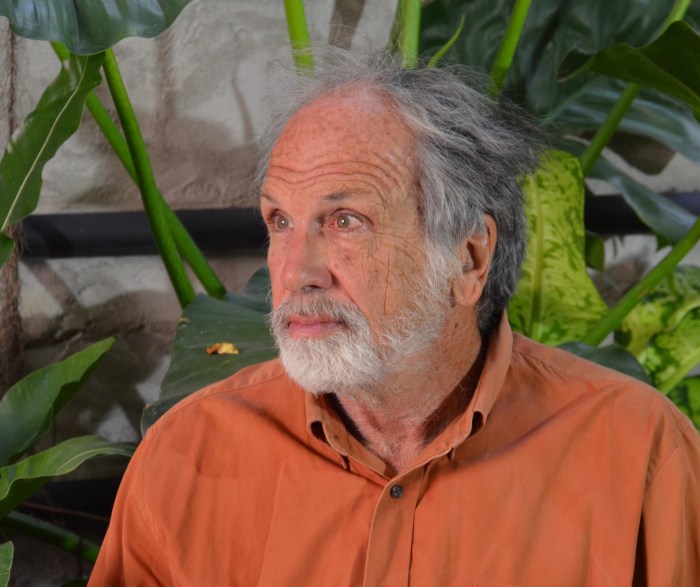
Most people don’t enjoy having their picture taken. Or at least that used to be the case. Now, at least among Asians, there’s a mania about it. At least where I live, the women take twenty pictures of themselves a day, always making the same expression. They also photograph their food as its served in a restaurant, before they dig in.


I take a lot of pictures of myself because no one else will show up to let me photograph them. I’m interested in lighting, photo-editing, and the technical aspects of photography. I also enjoy having a good portrait I can send off if the need arises.


OK, so I’m not as photogenic as I was thirty or forty years ago. Who is?


DSC_0792 (2)DSC_0795 (2)DSC_0807DSC_0812


Jung Meets Polanski


That which is too difficult to consciously process is stored in the unconscious mind. It does not disappear. As Carl Jung said, “Whatever does not emerge as consciousness returns as destiny.”

Nobody wants to be Mr. Potter. We’d all like to think of ourselves as George Bailey. Even misers don’t think they’re the problem; they conclude that free spending other people have money problems. We all would like to experience a generous spirit, a feeling of belonging, the assurance that our contentment does not depend on the actions of others but on our own true nature expressing itself in any and all circumstances.

If we’re not feeling that way now, we conclude it’s because others are holding us back. Circumstances dictate, but once they change, we’ll be able to relax and enjoy the present moment. We’ll choose to go out past the city lights and gaze at the stars. We’ll have the patience to develop a hobby. We’ll finally excel at things that delight us because we’ll no longer be driven by anxiety. We’ll have all the time in the world.

In our best moments, we realize that we’re choosing not to enjoy this contentment. Prodded by unreasonable fears, goaded by illogical desires, we toss and turn in this waking dream. “If only he/she/they would…then I could be happy.” “As soon as (insert somewhat plausible condition here) happens, then I’ll relax and stop fighting things.” Except the happy day never arrives. There’s always another unreasonable fear, another illogical desire.

This is how the unconscious mind manifests in our daily lives. It’s like a malevolent movie director (Polanski?) who makes brilliant but troubling films. We’re fascinated by the stories even though they make us feel troubled. We identify the characters and the tormet they endure, but maybe we’re relieved to find that we’re not that bad yet. Small consolation for a big problem.

Digital Fog

t-pinup


Many people smirk when they tell you “I don’t do social media.” They are above it. One imagines they spend hours in blissful contemplation over a good book, or perhaps engaging in what we used to quaintly describe as “writing” but is now known as “content creation.”

Maybe they glance up from their book occasionally, go online and look around. If they don’t like what they see they hunker down and try to tune out the monotonous drone of discourse that is not so much arguing over concepts as it is preaching to the choir. It’s not debate, it’s a pep rally. If you dare to say something on social media which irritates your fan base, you will soon hear plenty back at you. There is ample pressure to conform.

I’m learning some Handel keyboard pieces that he wrote when he was about nineteen. He and Bach were contemporaries and from almost the same part of what is now Germany. It’s hard to imagine one spot on earth turning out more pure musical genius than those two possessed.

I imagine there was a lot of pressure to conform back then when they were young and just making their way, but somehow I don’t think they let it get them down. They were alive with musical ideas, bursting with creativity, and they didn’t need focus groups and research studies that counted “likes” in order to forge ahead. They must have been as delighted by their creative output as we are today.

So we don’t need massive societal support to successfully be ourselves. We don’t even need dialogue. Bach once walked several days to hear a famous organist play. There were no recordings, no radio, no iTunes. None of that is necessary to reach great artistic heights.

If this whole Internet comes crashing down, the world will not be a worse place for it. It will simply be different. Songs will be written and performed, stories read and recited, dramas enacted, all without digital help. The blind English poet laureate John Milton used to compose his verses during the day and when his daughter came to cook him dinner at night, he would narrate to her his output for the day and she would write it down. Even late in life his mind was that sharp.

The digital fog that pretends to be so much will reveal the true nature of things after it’s been burned away.

Purposeful Forgetting


Phong Nha Park

DSC06228

When you’re an American expat and you want to move freely in the world, you have to deliberately not remember a lot in order to experience a sense of ease and comfort. Freedom from guilt means purposeful forgetting. You can’t very well vacation in a country that we bombed repeatedly for years because we disapproved of their self-governance.

The problem for Americans is that caveat rules out most of the developing world. Central America, South America, Indochina, the Middle East, Southern Europe…all have felt the lash of our enormous and deadly whip. If you’ve got enough in the bank you could confine your wandering to Switzerland or Scandanavia without having to flip into denial mode.

True, we didn’t bomb Argentina and Chile, we just sent Kissinger there to tell them they could take care of their Communist problem without worrying about interference from us. OK, in our role as Global Robocop we didn’t kill as many foreign people as Stalin or Mao did of their own, but that doesn’t exactly render us white as snow. We trained the assassins from Guatemala, Honduras, Salvador and we gave money directly to the Contras in Nicaragua.

In a few weeks I will be venturing to Dong Hoi,Vietnam. We’ll be taking advantage of a super cheap fare from our home in Chiang Mai, Thailand. The city of Dong Hoi is new, because we completely destroyed the old city in 1971. Back then we left the shell of one building and a palm tree standing. Dong Hoi had the misfortune to be the first city of any size north of the DMZ, and planes taking off from Danang airport found it convenient to drop their load there.

If my prior visit to Dong Hoi will serve as any indication, I expect to be treated cordially by the people I meet. The family members who run the hotel I booked were very nice to me last time. I rented a motorcycle from them and drove to Phong Na park, a lush forest preserve that hosts some of the most attractive limestone caves in the world. Fifty years ago there wasn’t much there to bomb, but we did drop tons of Agent Orange on the vast canopy of trees, because we called it the “Ho Chi Minh Trail,” and saw their vegetation as an affront to our security.

There is also a lot of unexploded ordinance there, so I won’t do a whole lot of hiking off the trails. The United Nations has done their best to help Laos and Vietnam clean up the cluster bomb mess we made, but they haven’t made much progress yet. We may have to pitch in.

In my search for a place to live out my golden years I’ve traveled to many former hot spots in Central and South America.

When I was in Argentina they were making efforts to remember and honor the victims of the military killing orgy that went on after Kissinger promised them a free hand. In Chile, our puppet Pinochet had his troops bomb the Presidential Palace while Salvador Allende, former President of the University of Chile and the first democratically elected Communist ruler of any country was inside.

The first time I visited Hanoi, I was staying in a hotel in an old part of the city and reading a book on the history of our war with that country. It turns out that Kissinger and Nixon hatched a plan to make the Vietnamese think Nixon was insane, and thus drive them to hurry to the negotiating table and sign a truce. On Christmas day we bombed Hanoi. Unlike our efforts at the end of World War II in Japan and Germany, and our police action in North Korea, we had reverted to the genteel notion of obeying the Geneva Conventions and not directly targeting civilians. Before the Chrtistmas Bombing (Operation Linebacker) most of our bombing in Vietnam was restricted to military targets. In Laos, because there were few military targets, we bombed anything that moved and kept that up for ten years. But anyway, on Christmas day, 1972 a bomb dropped from a B-52 pierced the roof of the hospital next door to the hotel in which I was now staying and exploded in the operating room killing everyone. I put down the book and stared at the wall that separated my hotel from the hospital. Why had the desk clerk smiled at me when I checked in? Why wasn’t there an angry mob outside demanding my head?

As the ugliness of global economic disparity continues to grow, there will be more refugees. Countries like Nigeria send thousands of young men north to Libya, where they climb into rafts and hope to make it to Greece or Sicily. Some of them do, and then they find their way to Calais, where nobody is glad to see them. They don’t know what else to do. The bottom billion people on this planet are sliding backwards. Their countries are not just falling behind, they’re falling apart.

Of course, it’s only matter of time before we bring them democracy, one bomb at a time.


the author reading this essay:  http://chirb.it/Mkxhp3