Jung Meets Polanski


That which is too difficult to consciously process is stored in the unconscious mind. It does not disappear. As Carl Jung said, “Whatever does not emerge as consciousness returns as destiny.”

Nobody wants to be Mr. Potter. We’d all like to think of ourselves as George Bailey. Even misers don’t think they’re the problem; they conclude that free spending other people have money problems. We all would like to experience a generous spirit, a feeling of belonging, the assurance that our contentment does not depend on the actions of others but on our own true nature expressing itself in any and all circumstances.

If we’re not feeling that way now, we conclude it’s because others are holding us back. Circumstances dictate, but once they change, we’ll be able to relax and enjoy the present moment. We’ll choose to go out past the city lights and gaze at the stars. We’ll have the patience to develop a hobby. We’ll finally excel at things that delight us because we’ll no longer be driven by anxiety. We’ll have all the time in the world.

In our best moments, we realize that we’re choosing not to enjoy this contentment. Prodded by unreasonable fears, goaded by illogical desires, we toss and turn in this waking dream. “If only he/she/they would…then I could be happy.” “As soon as (insert somewhat plausible condition here) happens, then I’ll relax and stop fighting things.” Except the happy day never arrives. There’s always another unreasonable fear, another illogical desire.

This is how the unconscious mind manifests in our daily lives. It’s like a malevolent movie director (Polanski?) who makes brilliant but troubling films. We’re fascinated by the stories even though they make us feel troubled. We identify the characters and the tormet they endure, but maybe we’re relieved to find that we’re not that bad yet. Small consolation for a big problem.

Digital Fog

t-pinup


Many people smirk when they tell you “I don’t do social media.” They are above it. One imagines they spend hours in blissful contemplation over a good book, or perhaps engaging in what we used to quaintly describe as “writing” but is now known as “content creation.”

Maybe they glance up from their book occasionally, go online and look around. If they don’t like what they see they hunker down and try to tune out the monotonous drone of discourse that is not so much arguing over concepts as it is preaching to the choir. It’s not debate, it’s a pep rally. If you dare to say something on social media which irritates your fan base, you will soon hear plenty back at you. There is ample pressure to conform.

I’m learning some Handel keyboard pieces that he wrote when he was about nineteen. He and Bach were contemporaries and from almost the same part of what is now Germany. It’s hard to imagine one spot on earth turning out more pure musical genius than those two possessed.

I imagine there was a lot of pressure to conform back then when they were young and just making their way, but somehow I don’t think they let it get them down. They were alive with musical ideas, bursting with creativity, and they didn’t need focus groups and research studies that counted “likes” in order to forge ahead. They must have been as delighted by their creative output as we are today.

So we don’t need massive societal support to successfully be ourselves. We don’t even need dialogue. Bach once walked several days to hear a famous organist play. There were no recordings, no radio, no iTunes. None of that is necessary to reach great artistic heights.

If this whole Internet comes crashing down, the world will not be a worse place for it. It will simply be different. Songs will be written and performed, stories read and recited, dramas enacted, all without digital help. The blind English poet laureate John Milton used to compose his verses during the day and when his daughter came to cook him dinner at night, he would narrate to her his output for the day and she would write it down. Even late in life his mind was that sharp.

The digital fog that pretends to be so much will reveal the true nature of things after it’s been burned away.

Purposeful Forgetting


Phong Nha Park

DSC06228

When you’re an American expat and you want to move freely in the world, you have to deliberately not remember a lot in order to experience a sense of ease and comfort. Freedom from guilt means purposeful forgetting. You can’t very well vacation in a country that we bombed repeatedly for years because we disapproved of their self-governance.

The problem for Americans is that caveat rules out most of the developing world. Central America, South America, Indochina, the Middle East, Southern Europe…all have felt the lash of our enormous and deadly whip. If you’ve got enough in the bank you could confine your wandering to Switzerland or Scandanavia without having to flip into denial mode.

True, we didn’t bomb Argentina and Chile, we just sent Kissinger there to tell them they could take care of their Communist problem without worrying about interference from us. OK, in our role as Global Robocop we didn’t kill as many foreign people as Stalin or Mao did of their own, but that doesn’t exactly render us white as snow. We trained the assassins from Guatemala, Honduras, Salvador and we gave money directly to the Contras in Nicaragua.

In a few weeks I will be venturing to Dong Hoi,Vietnam. We’ll be taking advantage of a super cheap fare from our home in Chiang Mai, Thailand. The city of Dong Hoi is new, because we completely destroyed the old city in 1971. Back then we left the shell of one building and a palm tree standing. Dong Hoi had the misfortune to be the first city of any size north of the DMZ, and planes taking off from Danang airport found it convenient to drop their load there.

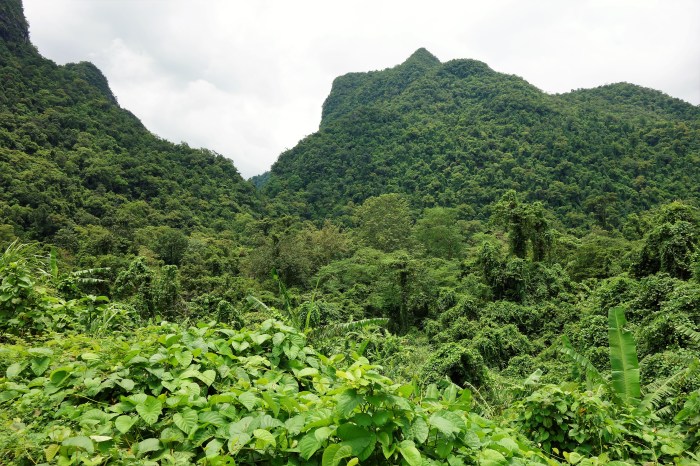
If my prior visit to Dong Hoi will serve as any indication, I expect to be treated cordially by the people I meet. The family members who run the hotel I booked were very nice to me last time. I rented a motorcycle from them and drove to Phong Na park, a lush forest preserve that hosts some of the most attractive limestone caves in the world. Fifty years ago there wasn’t much there to bomb, but we did drop tons of Agent Orange on the vast canopy of trees, because we called it the “Ho Chi Minh Trail,” and saw their vegetation as an affront to our security.

There is also a lot of unexploded ordinance there, so I won’t do a whole lot of hiking off the trails. The United Nations has done their best to help Laos and Vietnam clean up the cluster bomb mess we made, but they haven’t made much progress yet. We may have to pitch in.

In my search for a place to live out my golden years I’ve traveled to many former hot spots in Central and South America.

When I was in Argentina they were making efforts to remember and honor the victims of the military killing orgy that went on after Kissinger promised them a free hand. In Chile, our puppet Pinochet had his troops bomb the Presidential Palace while Salvador Allende, former President of the University of Chile and the first democratically elected Communist ruler of any country was inside.

The first time I visited Hanoi, I was staying in a hotel in an old part of the city and reading a book on the history of our war with that country. It turns out that Kissinger and Nixon hatched a plan to make the Vietnamese think Nixon was insane, and thus drive them to hurry to the negotiating table and sign a truce. On Christmas day we bombed Hanoi. Unlike our efforts at the end of World War II in Japan and Germany, and our police action in North Korea, we had reverted to the genteel notion of obeying the Geneva Conventions and not directly targeting civilians. Before the Chrtistmas Bombing (Operation Linebacker) most of our bombing in Vietnam was restricted to military targets. In Laos, because there were few military targets, we bombed anything that moved and kept that up for ten years. But anyway, on Christmas day, 1972 a bomb dropped from a B-52 pierced the roof of the hospital next door to the hotel in which I was now staying and exploded in the operating room killing everyone. I put down the book and stared at the wall that separated my hotel from the hospital. Why had the desk clerk smiled at me when I checked in? Why wasn’t there an angry mob outside demanding my head?

As the ugliness of global economic disparity continues to grow, there will be more refugees. Countries like Nigeria send thousands of young men north to Libya, where they climb into rafts and hope to make it to Greece or Sicily. Some of them do, and then they find their way to Calais, where nobody is glad to see them. They don’t know what else to do. The bottom billion people on this planet are sliding backwards. Their countries are not just falling behind, they’re falling apart.

Of course, it’s only matter of time before we bring them democracy, one bomb at a time.


the author reading this essay:  http://chirb.it/Mkxhp3


Here And Now Is Where It’s At

13010769_10204870102392053_4587218796996264127_n


The voices in my head cry “If you’re this old, how come you’re not rich yet? And even if you’re not presently hurting for money, how come you’re not happy?”


The present moment and the profundity it contains is sufficient for my happiness. I can’t experience the present moment if I’m judging or analyzing. There may be a time for that later, but right now I merely want to notice what’s happening here, right now. I want to dig the bliss of the present moment.


Nothing is required of me but stillness and appreciation. Not even a new thought is necessary. If I want to take action, I don’t need to brainstorm and come up with an action plan. Right actions will follow naturally if I can sit with comfortable and contented absorption.


Not every idea I have is worth acting on. Thoughts that come with urgency are often the least reliable. All I need to do is focus on doing the next obviously right thing, and forego the temptation to rush into action.


Sometimes the hardest and wisest thing to do is nothing at all.


Action could be about the thing I had been thinking about or something else entirely. Whenever I feel anxious, my attention doesn’t just wander, it leaps light years. I might not be able to remember which idea seemed so important ten seconds ago, but I can remember the girl sitting across from me in third grade over sixty years ago. Margie. She often wore a green sweater. 


It doesn’t matter in the long run which path I take as long as I am not acting from addiction or compulsion. As a free agent enjoying free will, I’m capable of surprising both myself and others.

Be Yourself Because There’s Really No Alternative

14570407_1263206393713451_8831196776901999127_n


If you’re not at least attempting to please yourself, whom do you intend to please? You probably won’t be very good at pretending to accomplish another person’s will for you. You will do better dropping the pretense and simply intending to please yourself.

If you’re trying to be what other people want you to be, then who will be you?

People who are truly themselves ring true and are often a delight to watch and be around. Jimmy Cagney was an actor as well as a real character. Even when pretending to be somebody else he was enjoying himself. We only know of his acting in movies where he pretended to inhabit character parts written and directed by others, but he brought so much of himself along for the ride that he retained ownership of the performance. In doing so, he inspired and pleased others. From all accounts, he lived a long and happy life.

Is it possible to drop the facade and find your true self later in life? Miguel de Cervantes, the Spanish Shakespeare, found himself chained to a wall in debtors prison in Madrid when he came up with the idea for Don Quixote. He became a successful writer in his sixties, and the Man of La Mancha made a lot of people a lot of money. Unfortunately, since copyright was a novel concept at the time, he didn’t become super rich, but at least he was comfortable by the time he died at the age of sixty-eight.

So late bloomers can take hope. Some people seem to have little choice in the matter. Elvis was such a weird creature that he had no hope of being anyone other than Elvis. He had no way to hedge his bet. His choice was either to be the King of Rock and Roll or be a garage mechanic.

How can you know when you’re being your true self and doing what you’re uniquely equipped to do? You enjoy it. It’s not drudgery. Anything else is a sell-out, for you and the world in general. No matter how much of a chameleon you think you are, you’ll be far more effective as yourself. You’ll have more fun and the people around you will enjoy your presence and activity.


here’s an audio clip of me reading this essay 2:40  http://chirb.it/cqvAAM


A Blank Slate

DSC06228


No Plan, Still Time Passes

It occurs to me that living in Chiang Mai, Thailand hasn’t really hampered my ability to be creatively productive. If I’m not writing or performing to the best of my ability, I can’t blame it on location. If I were hiding in a furnished room in Los Angeles, hunched over my laptop and drinking coffee from a paper cup (not Starbucks, too expensive) chances are my phone wouldn’t be ringing with offers from publishers, studios, or agents.
At the age of sixty-seven, I probably wouldn’t be going to parties a lot, either. The nightclub crowd would be unaware of my existence. Maybe I could pass myself off as Harry Dean Stanton’s younger brother, or Tommy Lee Jones’ cousin. A-list geezers.

No, I can’t blame Thailand for whatever difficulties I face as I trudge the lonely trail of senescence. Well, actually, there are a lot of us on that trail, only some are using walkers, others four-pointed canes, and the rest of us are hobbling with an uneven gait.

But again, what’s the alternative? The good doctors here are as good as they are in the States, at least as good at the doctors who will accept Medicare patients, and since the prices for medical intervention here are about ten times lower than in the States, that would about equal my deductible if I chose to return home to use the medical policy I paid for over a span of forty five years. That one, the one I don’t get to use over here.

Oh sure, the weather is too hot for me most of the year. Even most Thai people would agree with that. From November to January it gets cool enough up here in the north of Thailand so that a Westerner might consider putting on a light wrap after dark. That’s when the Thais think it’s time to unpack some serious gloves and fur-lined parkas.

I’m sure Lake Como or Martha’s Vineyard would be more to my taste. I hear Norway is spectacular from June to August. All of that has nothing to do with me now, nor will it ever unless Fate has some amazing twists and turns in store for me.

But none of that matters, because I’m happy with my current station. After a week in Krabi, at the beach, I’m home again with my piano and my Chiang Mai routine. I don’t do a lot, my days are pretty free, and I make sure to rest plenty after the smallest of exertions. You can never be too relaxed in retirement.

In Krabi we had comfortable hotel rooms for around sixteen and seventeen dollars, the flight there and back came to eighty five dollars each. The only thing there that significantly more expensive than Chiang Mai was massage, which was double the price, so we mostly avoided it.

Tomorrow I’ll go to my swimming pool and do a kilometer. Takes me half an hour. I’ll be the only person in the water, an Olympic-sized fifty meter pool. Then I’ll take a nap in the afternoon, because even though a kilometer is some swimmer’s idea of a mere warm up, to me it’s the whole enchilada.

Even though my e-mail provider Microsoft Outlook would like me to believe otherwise by sending me my calendar for the day, which contains events and tasks apparently set by others, some of whom I don’t even know, I think I have the day off. I do know for certain that I didn’t create these “events” or “tasks” they insist are real and fixed. As far as I can see, my days are pretty much a blank slate. Most of the time, I have not consented to be anywhere or to do anything.

Today my virtual assistant informs me that I have three events, but it soothingly assures me “you don’t have any tasks for today.” Free to come and go as I please, I intend to hop on my motor scooter or bicycle and zip around town, or drive into the nearby mountains. My photo blog shows lots of pictures of hills and trees. They all look the same, but I keep taking more.

I will also find time to play Handel on my electronic keyboard.

The interesting and encouraging thing about practicing a musical instrument is that you get better even if you take a week off. In that time when you weren’t practicing, you still improve. If you take more than a week off, that effect begins to reverse itself. It is, however, counter-intuitive that progress can be made by not practicing. I guess the chemical bath in which my brain cells seep gets work done even when I’m not on board with that.

When you make a deliberate attempt to stop doing, you find that your body is doing many things for you. I was already impressed by the fact that my heart continues to beat without my permissions, and my lungs go about their breathing business without my direction or urging, but this brain percolating thing is really something. It does so without being plugged into the Internet or a power source. It’s half-an-hour before dawn and it’s still working fine, which means it’s not even solar-powered. Who thought this one up? Give that guy a prize!

GEEZER TRAVEL


HOW TO ROAM THE PLANET LIKE A TEENAGER WHEN YOU’RE A GEEZER ABROAD

I started wandering whenever possible right after I found out there was no law prohibiting it. I got my first passport when I was eighteen, and visited my first foreign country, Russia. The year was 1968. I celebrated by birthday in Leningrad, and our tour group went to the theater to watch a production of Swan Lake. The sun didn’t set that night, it just hid itself behind some buildings at eleven and rose again two hours later.

I was hooked on travel. Money spent on travel beat money spent buying things. Cars, houses, boats…you can keep ’em. They require maintenance, steadily depreciate, and are forms of bondage disguised as assets. People even borrow money to buy them! Go figure.

I started going to Mexico first. You could drive there. From Missouri it took twenty-four hours, but that didn’t seem like too much for my roommates and I from the University of Missouri campus in Columbia, Missouri. Inspired by a Bob Dylan song, we drove to Juarez and stayed at the Hotel Diamante for two dollars a night, split three ways. A beer cost eight cents. Mystery meat tacos grilled on the street cost the same. I was further hooked.

I made twenty more trips to Mexico until I found you could fly pretty cheaply to other places if you planned ahead. So I went to Ireland, England and France, back when the cost of doing so wasn’t prohibitive. A hotel room in the left bank of Paris was a cheap as a Motel Six in Columbia, Missouri, and a heck of a lot more interesting.

I never gave much thought to making money for most of my life because practical matters left me cold. I graduated from a prestigious graduate school with a degree in Playwriting. There seemed no obvious path to monetizing this diploma, so I moved to San Francisco with five friends and we acted in a comedy troupe. Again, the dollars just flew by but not into our pockets.

Life happened. When I had three kids with another on the way I moved back to the Midwest to see if I could score a teaching job. A few temporary appointments came my way, but nothing that spelled tenure. My kids grew older and so did I.

When I was about sixty I saw the handwriting on the wall, and it said “take action or be doomed to a life as a charity case.” So I widened by travel scope. I went to Argentina about fifteen times, Nicaragua twelve, Ecuador, Peru and Colombia. All excellent places, but then I discovered Thailand, where I now live.

I’ve been lucky, and I know it. Some people have been luckier and some not so much. I have a cousin who is a billionaire. He recently endowed a building at his alma mater’s business college. When he spoke to the students at the grand opening, he advised them to not bother to learn a foreign language, as it was his experience that the international language of business is English.

His sister told me this. It gave me pause. I imagine he was speaking the absolute truth from his experience. When he travels on business, someone meets him at the airport holding a sign with his name on it. He is taken to the convention center/hotel where the staff all speaks English. No matter where he goes, in his world everybody who’s anybody speaks English.

My experience has been the exact opposite of my cousin’s. Nobody I meet in my travels speaks English, because I only go to places off the beaten path in emerging economies that haven’t quite emerged yet.

My cousin is my age, and I hope to compare experiences with him before we both make that last journey to the great beyond.

One benefit I have enjoyed was learning Russian, Spanish and Thai. I suppose if that had been my main goal I could have achieved it far more directly and economically than enduring bus rides where my fellow passengers held life poultry, the bus room being reserved for luggage and hog-tied pigs.

Why Thailand?

It’s cheap, it’s interesting, and they have Thai massage. The people are sweet. I like the food better than the rice and beans with a smattering of chicken or pork they eat in most of Latin America.

Heck, you gotta settle down someplace. Not choosing is also a choice, and an expensive one. So I chose Chiang Mai, Thailand, and so far I have no regrets. When I get really old I might choose a mountain village somewhere, but hopefully in a place where I don’t have to learn yet another language.

It occurs to me that living in Chiang Mai, Thailand hasn’t really hampered my ability to be creatively productive. If I’m not writing or performing to the best of my ability, I can’t blame it on location. If I were hiding in a furnished room in Los Angeles, hunched over my laptop and drinking coffee from a paper cup (not Starbucks, too expensive) chances are my phone wouldn’t be ringing with offers from publishers, studios, or agents.


At the age of sixty-seven, I probably wouldn’t be going to parties a lot, either. The nightclub crowd would be unaware of my existence. Maybe I could pass myself off as Harry Dean Stanton’s younger brother, or Tommy Lee Jones’ cousin. A-list geezers.

No, I can’t blame Thailand for whatever difficulties I face as I trudge the lonely trail of senescence. Well, actually, there are a lot of us on that trail, only some are using walkers, others four-pointed canes, and the rest of us are hobbling with an uneven gait.

But again, what’s the alternative? The good doctors here are as good as they are in the States, at least as good at the doctors who will accept Medicare patients, and since the prices for medical intervention here are about ten times lower than in the States, that would about equal my deductible if I chose to return home to use the medical policy I paid for over a span of forty five years. That one, the one I don’t get to use over here.

Oh sure, the weather is too hot for me most of the year. Even most Thai people would agree with that. From November to January it gets cool enough up here in the north of Thailand so that a Westerner might consider putting on a light wrap after dark. That’s when the Thais think it’s time to unpack some serious gloves and fur-lined parkas.

I’m sure Lake Como or Martha’s Vineyard would be more to my taste. I hear Norway is spectacular from June to August. All of that has nothing to do with me now, nor will it ever unless Fate has some amazing twists and turns in store for me.

But none of that matters, because I’m happy with my current station. After a week in Krabi, at the beach, I’m home again with my piano and my Chiang Mai routine. I don’t do a lot, my days are pretty free, and I make sure to rest plenty after the smallest of exertions. You can never be too relaxed in retirement.

In Krabi we had comfortable hotel rooms for around sixteen and seventeen dollars, the flight there and back came to eighty five dollars each. The only thing there that significantly more expensive than Chiang Mai was massage, which was double the price, so we mostly avoided it.

Tomorrow I’ll go to my swimming pool and do a kilometer. Takes me half an hour. I’ll be the only person in the water, an Olympic-sized fifty meter pool. Then I’ll take a nap in the afternoon, because even though a kilometer is some swimmer’s idea of a mere warm up, to me it’s the whole enchilada.

No Plan, Still Time Passes

Even though my e-mail provider Microsoft Outlook would like me to believe otherwise by sending me my calendar for the day, which contains events and tasks apparently set by others, some of whom I don’t even know, I think I have the day off. I do know for certain that I didn’t create these “events” or “tasks” they insist are real and fixed. As far as I can see, my days are pretty much a blank slate. Most of the time, I have not consented to be anywhere or to do anything.

Today my virtual assistant informs me that I have three events, but it soothingly assures me “you don’t have any tasks for today.” Free to come and go as I please, I intend to hop on my motor scooter or bicycle and zip around town, or drive into the nearby mountains. My photo blog shows lots of pictures of hills and trees. They all look the same, but I keep taking more.

I will also find time to play Handel on my electronic keyboard.

The interesting and encouraging thing about practicing a musical instrument is that you get better even if you take a week off. In that time when you weren’t practicing, you still improve. If you take more than a week off, that effect begins to reverse itself. It is, however, counter-intuitive that progress can be made by not practicing. I guess the chemical bath in which my brain cells seep gets work done even when I’m not on board with that.

When you make a deliberate attempt to stop doing, you find that your body is doing many things for you. I was already impressed by the fact that my heart continues to beat without my permissions, and my lungs go about their breathing business without my direction or urging, but this brain percolating thing is really something. It does so without being plugged into the Internet or a power source. It’s half-an-hour before dawn and it’s still working fine, which means it’s not even solar-powered. Who thought this one up? Give that guy a prize!

QUESTIONS AND ANSWERS

Don’t you get lonely? Homesick? Don’t you feel lost in such a foreign country?

Maybe there’s something wrong with me, but no. I have just as many friends here as I’ve had anywhere. True, I can’t talk to most of the people who live here, but I don’t need to. Our paths don’t intersect. And there are surely enough people who speak English and are roughly in my position for me to talk with if I need to talk.

Sometimes I find that I’m hoarse because I don’t talk for days at a time. I live with a Thai woman whom I call my wife. She can’t speak English, and my Thai is pretty poor, so we don’t talk a lot. Talking is overrated.

I never miss the States. Never. Sometimes I worry that America will self-destruct and I’ll be stranded on the other side of the world with no source of income. But that’s not a terribly realistic concern.

A more reasonable concern would be a health crisis that would involve either me paying out of pocket here or flying home to take advantage of medicare. But that’s too big to worry about. I mean, yes, it will eventually come down to that, but there’s no way I can prepare for such a nebulous calamity. If I want to start up Medicare Part B, the one that pays physicians fees, I have to make that decision months in advance. And that will seriously impact my social security pension, which is pretty much all I have. Then there are drug costs in America, which are about ten to twenty times what they are here. So, I think I’m better off trying to stay healthy and stay here awaiting the inevitable. This is, as my friend Lawrence once commented, sudden death overtime. Whoever scores the next goal wins the game.

The good news is that funeral costs here are also a fraction of what they are in the States. A simple cremation runs to hundreds of dollars, not thousands. Not that funeral price should be my concern, but it will effect those whom I leave behind. I’ve already resigned myself to the fact that I’m not going to leave much an estate for my children. Maybe something will happen to change that, but I’m not holding my breath.

Why do you go to a place that’s full of sex addicts, child molesters and losers? Why not stay home, or retire someplace nice?

I freely admit that a lot of the reason I’m here, or would have been in Latin America, has to do with the cost of living. The cheap places of the world attract more than their share of alcoholics, sex addicts, child molesters, because they can get away with a little bit more before they come to reckoning. But that doesn’t mean that everyone here is an addict on the run, nor does it mean that Monaco and Zurich aren’t home to plenty of addicts. The ones in rich countries are less obvious. They’re more discrete.

Ex-patriate scenes are not inherently creepy. To me, Chiang Mai feels like a college town filled with old people. That’s because my friends remind me of myself in college. As now, back then I observed no strict schedule, and was willing to cut class at the drop of a hat. Drop acid and go skinny dipping? Let’s go!

More interested in fun than in study. For the first couple of years in college I was a chemistry major. I would watch the Chinese and Indian chemistry students study for hours each night, while I got high and wondered how to chase women more effectively. Their families had sacrificed to send them to America and I was working an hour a day as a busboy to support myself in school. My parents paid a few hundred dollars a year for my tuition. At state schools like mine, that’s all it cost back then.

Now, I’m surrounded by men and women living on small pensions. As long as they don’t get extravagant or go crazy, they’ll do just fine. We talk about where to buy cheese or bread, things that Thais don’t eat. We complain about visa restrictions. Back in the student union at the University of Missouri we talked about where to buy pot and how to avoid the draft.

Nobody Brings All Their Crap Here

A great opportunity inherent in retiring on the other side of the world is that you’re strongly persuaded to get rid of most of the crap you’ve been dutifully hauling around for the last thirty years. That dining room table with eight chairs, the sideboard, the wardrobe, the boxes of pictures and old tax returns, the clothes that you were going to wear again one day when you lost weight…all of it goes before you move many times zones away.

The airlines help with this by charging exorbitant rates for extra luggage. Nevertheless, I met a guy who had brought kayaks, canoes, a grand piano, oil paintings in a shipping container and then paid for it to be hauled up the entire length of Thailand to the mountains in the North. Some people take their shit seriously.

I arrived here three years ago with two suitcases. Since then, I have accumulated a minimal amount of “stuff,” the things that one puts in no particular order in boxes and then hides under the bed. I change residences every year, so I am not tempted to engage in recreational shopping. It was a lousy pastime anyway. Back in Iowa, I used to frequent auctions and delude myself into thinking I was running an antiques business selling the smallest items on eBay. Truth be told, I was simply a shopping addict justifying his addiction.

I was bored and I didn’t enjoy my job. The perfect recipe for cultivating an addiction, and I became very good at fooling myself into thinking this was “entrepreneurship!” Yes, I was the Donald Trump of funky boxes full of other people’s crap, stored in the garage until I had time to go through them all, photograph the best of the haul, and then haul the boxes back to the auction! Did I have a truck? No. Were my items neatly shelved and organized? Of course not!

Out of sight, out of mind. Then, when the garage door refused to close, I knew I had to change my ways.

Now, when I go to a big box store, or a Goodwill, and see the hollow eyes of middle-aged people wandering the aisles with full shopping carts, I feel a mixture of revulsion and sympathy. There but for the grace of God go I.

Living abroad as I do, I get comments from people who say “I wish I could do what you’re doing, but I have too much stuff that I can’t get rid of.” The next most frequent comment is “I’m on medications that I’m afraid I wouldn’t be able to get over there.” They’ve also bought into the phony medical insurance “benefit,” where you think your medical insurance is providing a level of cost reduction or security. Here in Thailand, medical costs are a fraction of what they are in the States, often less than the deductibles most insured people pay for services and drugs.

Inconvenient Truths

SWEPT UNDER THE RUG

Here in Thailand, there is a major smoke problem in the North every March. That’s when farmers burn the rice husks and the corn stalks. Most people who are free to do so leave for at least three weeks during the worst of the smoke. It’s dangerous to health, especially the smallest particles, which burrow deep into the lungs and stay there. Kids who are in school and parents with jobs are stuck here, shortening their lives with every breath.

No one seems to be able to solve the problem, and the government is heavily invested in not taking responsibility for it, nor in implicating the CP corporation, parent company to 7-11 and True/Move, as well as the major agricultural products company in Thailand. If anyone could get farmers to mulch or compost corn stalks it would be the company that sells them the seed and buys the final crop. But I’ve never seen that mentioned. I’ve attended forums with panels of experts, each preaching his own brand of obfuscation, explaining why the problem is intractable.

There are also campaigns to transfer the blame for deforestation, making it seems like it’s everybody’s fault. Schemes to get school children excited about planting trees. Schools collude one day a year when they do just that, the richest taking field trips to have their pictures taken of their students planting trees. We do the same thing in America when we want to deny what’s really going on. Get children to consume food products that make sicken and eventually kill them and then launch a “Got Milk?” campaign where celebrities have their pictures taken wearing a milk mustache.

Here in old Siam, the trends and fads are a few years behind the States. Thailand has lost more than sixty percent of its forests since 1950, but no one wants to talk about that. Instead, the government makes trees seeds available for free! They announce contests to come up with ideas to improve the efficacy of tree planting. These are “red herrings.” They make the Ministry in charge seem to be taking effective action. But no number of individuals can plant trees as quickly as Agribusiness can denude hillsides.

The problem is not the technology of planting, it is instead the deliberate deforestation by Agribusiness of Royal forests cleared in order to plant corn. This isn’t small scale stuff. These aren’t the random actions of poor farmers. Pretending that we each can “save the forests” by planting a seed on land we don’t own is folly. It’s like blaming the smoke in March on hill tribe people looking for mushrooms. Most people don’t own land here, certainly not most foreigners. What good does it do to plant a tree on ground that is going to mowed or paved over?

In Iowa, where I spent most of my time in America, politicians claim to be a friend of the family farm. Except there aren’t many family farms left, and those that survive are enormous operations, with millions of dollars at stake. Much bare ground is managed by corporations, and the owners of the land have retired to Florida or Arizona. You can drive for an hour in Central Iowa and not see anybody working outside. But you can sure smell the hogs when you pass an anonymous looking metal building with a lagoon out back.

Animal confinement is the rule of the day, and in Iowa there are ten times as many pigs as people, and ten to a hundred times more chickens and turkeys than pigs. Their waste is spread directly on fields as fertilizer, and when it rains, their unprocessed shit runs into creeks, then streams, then rivers. Iowa has the lowest surface water quality in the nation. In many industries, this would be considered Hazardous waste, and be dealt with as such, but not in Iowa, friend to the farmer.

Like the smoke in Thailand, the problem can’t be solved, because it’s almost illegal to even talk about it. “Farm Friendly” administrations have passed laws to limit slander and libel concerning animal confinement. A candidate for office who brings it up will certainly not be elected. Nitrates in drinking water are a state-wide public health hazard. Public rivers and reservoirs are off-limits to swimming. Clear Lake, the only natural lake in Iowa, is often closed to swimming. Algae blooms take over by mid-summer. All this runs downstream to the Gulf of Mexico, where it forms the Mother of All Algae Blooms.

We’re just now coming to grips with how often and to what degree we have been lied to by the people we thought were in charge. Nixon’s secret war in Laos and Cambodia, Reagan’s Iran/Contra scheme, Better Living Through Chemistry, Our Friend the Atom, Low-Fat Diets, Hydrogenated Cooking Oils with an infinite shelf life and which the body cannot differentiate from plastics, Sugar in everything, and when we objected to that, high fructose corn sweeteners and aspartame.


Where Your Treasure Is…

2658562-1024x709


“Where your treasure is, there is your heart also.” – Bible


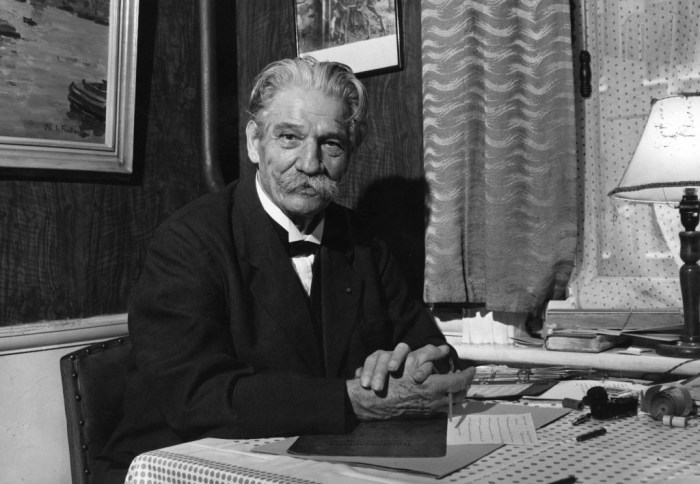
When Albert Schweitzer was still a young man, he was a theology professor at a Swiss University and had recently won a prestigious award for his multi-volume book on Bach’s organ works. He was on top of the world.

But he was a Christian, and Jesus says many times in the gospels, “sell everything you have and minister to the poorest of the poor. Then your reward will be great in heaven.” So Schweitzer was in a quandary.

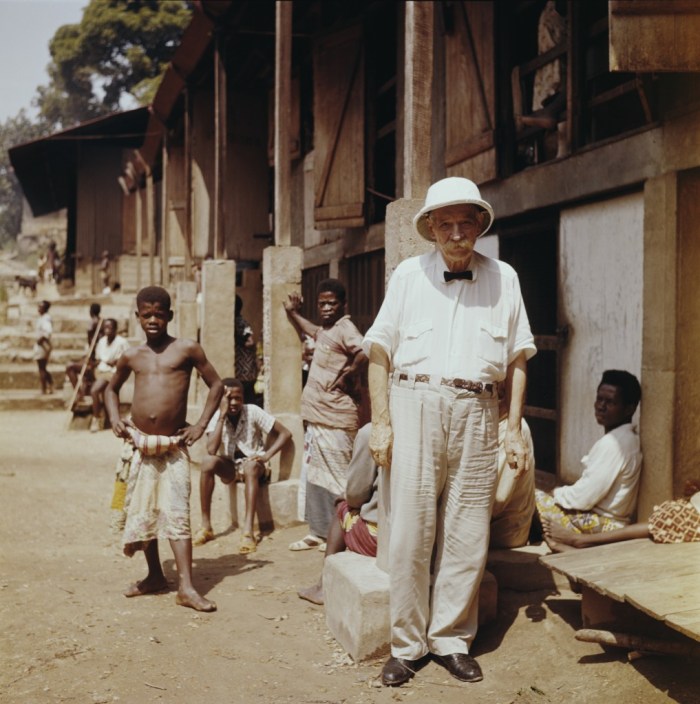
He prayed about it, asked himself where were the poorest of the poor. He concluded they were in Africa. He asked himself what they needed. Doctors. So he quit his job and enrolled in medical school. Then he began the process of fund-raising for the clinic he intended to establish in the Gabon.

All his colleagues at the University told him he was making a big mistake, that he was throwing away a brilliant career. Some of them gave him money. He finished medical school and his internship, bought the supplies for his clinic, and found himself slowly making his way up the Congo river, in a flotilla of canoes all paddled by naked black men. I imagine there were times on that trip when he wondered if his friends back home had been right.

Fortunately, he had bought an organ before he left Europe, and once they established the clinic and hospital he played that on his time off. The monkeys and tropical birds heard Bach being played on an organ that had to be pumped with a bellows in order to push air through the pipes.

He lived to be ninety. Here is a quote by him:

Success is not the key to happiness. Happiness is the key to success. If you love what you are doing, you will be successful.


529567901-1017x1024